
Announcement: Le Continent Captif published today!
The French edition of my book The Owned Continent is available as of today wherever fine French books are sold. Here's what I updated since the original book was published in December.

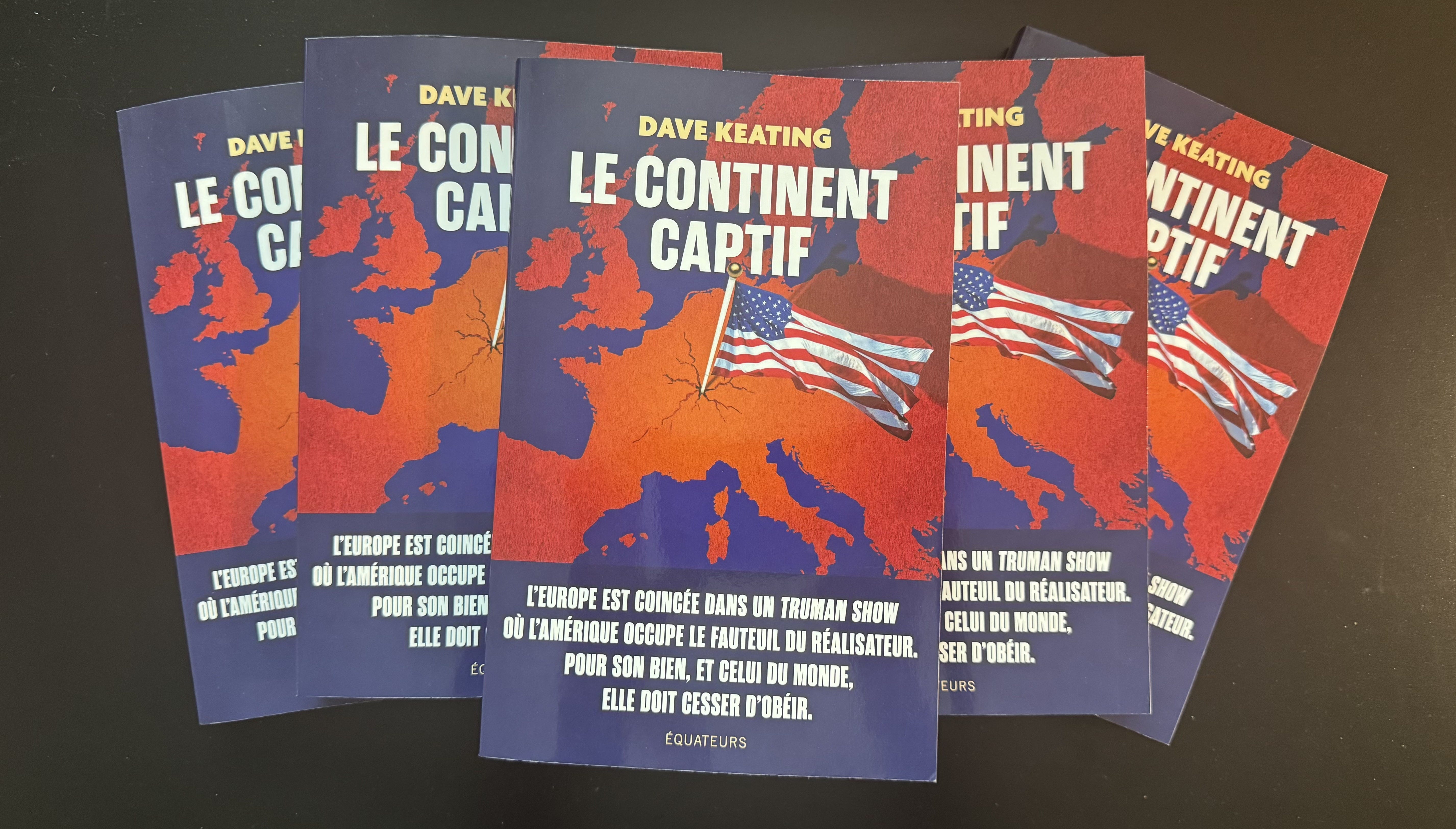
I’m thrilled to announce that the first non-English edition of The Owned Continent is available at bookstores as of today. Le Continent Captif, published by Les Éditions des Équateurs, has been updated from the original for the new developments that have taken place over the past six months. I’ll be doing the first public reading of the French edition at Librebook multilingual bookshop in Brussels next week 11 June at 7pm, with an interview by French journalist Quentin Aires from Contexte.
I thought it might be of interest to my readers to know what exactly it was that needed updating. On one hand, the main theme of the book has of course stayed the same. But there were two developments over the past six months that needed to be taken into account: Trump’s threats to Greenland and the Iran War.
Both things were already referenced in the English book which was published at the end of 2025, in Chapter 3 and Chapter 15. Trump had already made threats against Greenland in early 2025 but quickly got distracted, but Europeans laughed (nervously) it off as a joke. And in Chapter 10 (“Europe’s Daddy Complex”), I discussed the first bombing of Iran in June 2025 which was cheered by some European leaders. I believe that positive reinforcement from Europeans and some in the Democratic establishment in the US is a big part of what led to the Iran War debacle this year. “Congratulations and thank you for your decisive action in Iran, that was truly extraordinary and something no one else dared to do,” cooed NATO Secretary General Mark Rutte. Trump and Netanyahu were “doing the dirty work” for Europe, cheered German Chancellor Friedrich Merz.
What needed to be updated, of course, was the consequences of those actions (and non-actions) by European leaders in 2025. Their failure to respond forcefully to Trump’s Greenland threats only encouraged him to go further. As we’ve seen time and time again, Trump preys on perceived weakness. That’s why those places that stood up to him (Brazil, India, China) have mostly been spared or even rewarded. While the EU and UK, which surrendered so readily to Trump last year, have been the continued target for Trump’s repeated attacks.
The European cheerleading for the initial Iran bombing and for the Venezuela invasion is indirectly responsible for the situation we find ourselves in now. It’s no wonder that Trump was surprised by the European refusal to obey his command to send ships to open the Strait of Hormuz, given that the Europeans had obeyed his every command up till then and given him tacit moral support for his military misadventures. By being either silent or praiseful of the Iran and Venezuela operations, they gave him the green light. Sanchez was the only EU leader to immediately condemn the Iran War when it started this year, it took other leaders days or weeks to even express their displeasure.
And yet, the Greenland and Iran stories were the first time that our European leaders have said ‘no’ to Trump. That’s a significant development that needed to be reflected in the new book. As I’ve been saying in recent interviews, I think that these two developments have finally woken Europeans up to the American danger. We’re now seeing record lows for the proportion of Europeans that still trust the United States. But as I say in the new book, “les Européens se sont réveillés, mais ils ne se sont pas encore levé.” It’s not enough just to wake up, you also need to get out of bed. With this book I have endeavoured to lay out my ideas for how Europe can get out of bed.
I’m very curious to see what the reaction in France will be. There’s plenty in the book that is very complimentary of France, arguing that they were right all along about the danger of relying on America and the corrosive effects of American culture. But I also ask tough questions about why the rest of Europe didn’t listen to them. I have some harsh words about the arrogant way that these ideas have been expressed by French politicians in the past, which has often come off more like nationalism than pan-Europeanism. And I also criticise France’s myopic focus on language when it comes to the cultural influence debate, and argue that the emergence of English as a lingua franca spoken by more than half of Europeans (already a reality now) is a development that should be embraced rather than fought. I imagine that’s not going to go over well. But in my view, you cannot call yourself a European federalist while at the same time fighting against the common European lingua franca.
For those of you who speak French, you’re welcome to come to the book reading at Librebook next week to talk about these issues further and grab a signed copy of the book. And for those of you who don’t, and who haven’t read the original book yet, now’s the time!
oh yes, it will be fascinating to see / hear the reaction in France to this:
"I also criticise France’s myopic focus on language when it comes to the cultural influence debate, and argue that the emergence of English as a lingua franca spoken by more than half of Europeans (already a reality now) is a development that should be embraced rather than fought."
And, in many ways, the nature of the reaction might be a signal of how France and EUrope is changing too.