
Europe has a WhatsApp problem
Most Europeans text each other using an American-owned app that most Americans have never heard of. Yet the US government is trying to block the EU from regulating it.

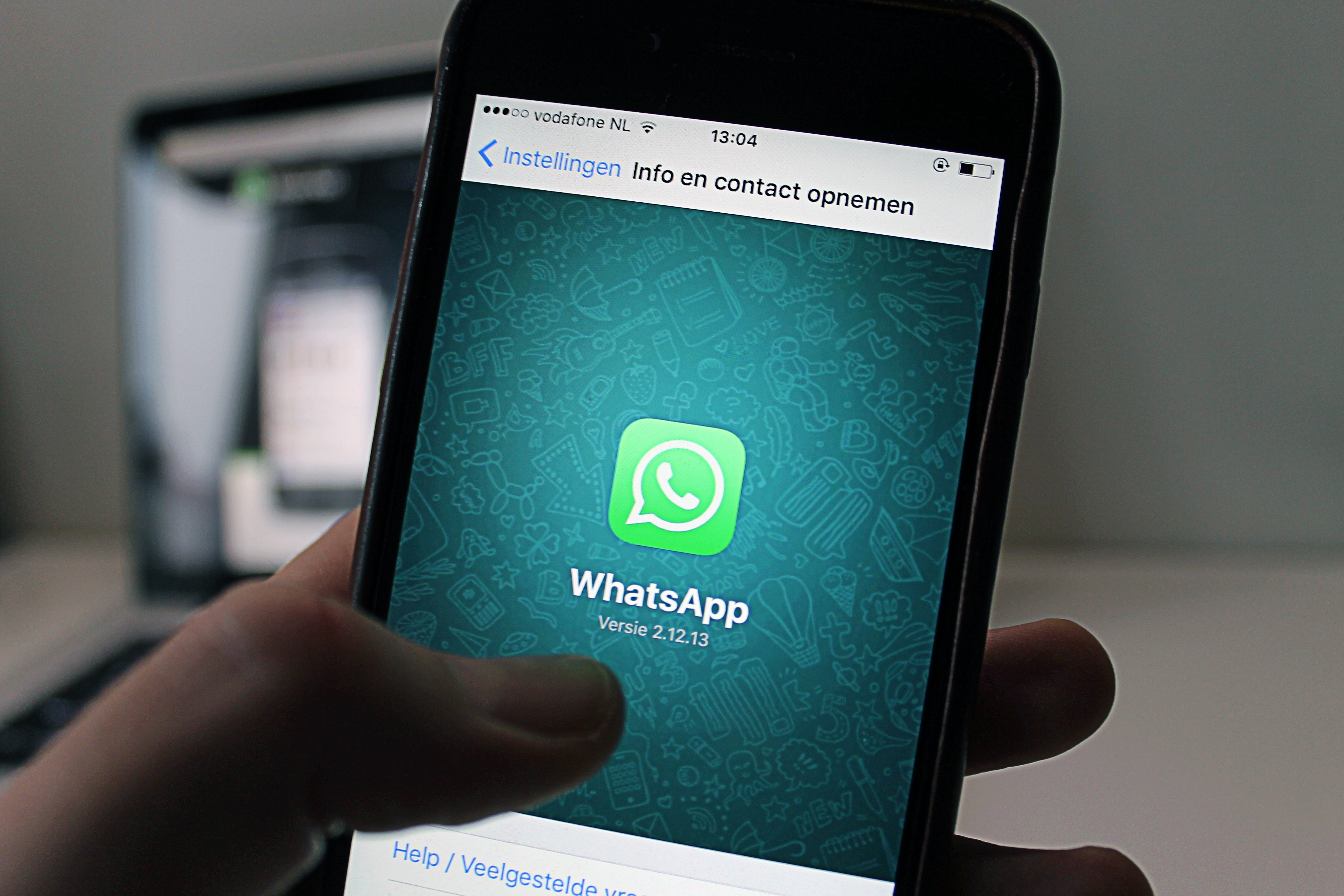
Yesterday, the European Commission announced it is ordering Meta, the owner of Facebook, Instagram and WhatsApp, to restore access for AI chatbots from rival companies to its messaging platform. The EU executive is conducting an antitrust investigation into Meta’s decision to bar access to WhatsApp for AI providers other than Meta AI, and the company must temporarily restore access while the investigation is running. The Commission said the intervention is needed to prevent “serious and irreparable harm to competition in this growing market by Meta’s conduct”.
Meta reacted furiously, accusing the Commission of “regulatory overreach” and saying it will appeal. The White House is likely to again intervene on Meta’s behalf. They have put political pressure on the EU when attempts have been made to regulate the company’s platforms. Meta owner Mark Zuckerberg has been lobbying President Trump to use US government pressure to stop EU regulation his company doesn’t like. He told the Joe Rogan podcast last year: “I think it’s a strategic advantage for the United States that we have a lot of the strongest companies in the world, and I think it should be part of the US strategy going forward to defend that.” Trump has happily obliged. In August 2025, after a meeting with Zuckerberg, Trump posted on Truth Social attacking the EU tech laws that Meta doesn’t like.
Yesterday’s announcement is just the latest salvo in the EU’s efforts to regulate an American tech giant that counts the vast majority of EU citizens among its users. But among all of Meta’s platforms, WhatsApp has been particularly vexing. Americans reading this may never have heard of it, but it is widely used in the rest of the world, especially in Europe. Around 80% of Europeans use WhatsApp to send text messages, with market share sitting at 90% in Spain and Italy. I don’t know anyone here who’s not on it. By contrast, only 23% of Americans reported using WhatsApp as of 2021, many of them from immigrant backgrounds who use the app to communicate with their friends and family in other countries.
The app is growing somewhat more popular in the US, with the figure rising to 32% in 2025. But the most-used messaging app in America is iMessage, the proprietary software on Apple iPhones which have a US market penetration of 62% (compared to 27% in Europe). In Europe iMessage is not as popular (the only people that text me on it are messaging from America). If one or both Americans in a text exchange don’t have an iPhone, they send a normal text. If you use an iPhone such a message shows up as green instead of blue - an almost imperceptible difference. Europeans are astonished when I tell them that Americans still use standard texts that go through their phone networks to chat with each other. But the data in standard texts sent over a network is quite private. With WhatsApp, it’s unclear where that data is going. The company says they can’t read your messages because of end-to-end encryption, but US authorities are reportedly looking into claims that this isn’t true.
As I write in my book The Owned Continent, the situation with WhatsApp is a bit like the Maestro debit cards we have here in Europe. Introduced in 1991 and only used in Europe (plus some countries in Latin America), you cannot use these cards to pay for things in the United States. But it has always been owned by the American company Mastercard (which is right now in the process of converting all Maestro cards in Europe to standard Mastercards which can be used in the US). Like with Maestro, WhatsApp is a product used in Europe and largely unknown to Americans yet it is paradoxically owned by an American company - which makes it very hard for Europe to regulate because of US government pressure.
Like with Facebook, WhatsApp had the advantage of being the first mover to scale. There are other messaging apps like Signal, Viber and Telegram, but people don’t want to use multiple chat apps. In Europe WhatsApp has been the standard for communication for well over a decade now. European companies are now using it for their customer service. Groupchats are particularly popular, used in workplaces, to share information among neighbours, and communicate all at once with your whole family. In some ways it’s even starting to be used as social media, with some group chats being used as a place to send interesting links or comments without necessarily expecting a response. Last time I was in the US I noticed that Meta is now advertising WhatsApp on TV to Americans, highlighting the groupchat feature specifically, which can’t be done using standard texts. Hence the recent boost in Americans signing up. I imagine Apple isn’t thrilled about that.
In short, here in Europe, WhatsApp has become a main fixture of our daily lives, processing a huge amount of our communications. So how did it become so powerful?
Facebook gobbles up a potential competitor
In 2009, two former Yahoo engineers in San Jose California who had been rejected for jobs at Facebook built a small app that could display statuses in an iPhone's contacts menu, showing if a person was at work or on a call. It didn’t get much take-up at first, but everything changed when Apple launched its push technology that could ping users even when not using the app later that year. The app was updated so that everyone in the user’s network would be notified when their status changed, and the small number of users started using it to send targeted status updates to alert people with things like “I’m on my way”. That eventually transitioned into a purpose-designed messaging component in WhatsApp 2.0 released in August 2009. The number of active users suddenly increased to 250,000. Users had discovered the app’s real utility: it let people message each other without having to pay text fees to their carrier.
Texting (SMS, as it was called in Europe at the time) had been much faster to catch on in Europe than in the US. American carriers were at first charging people very high fees to either send or receive a message. I encountered the concept of an SMS for the first time when I did my study abroad year in Prague in 2002. I got very used to them and then when I got back to New York City I tried sending my American friends texts and they got mad. “Don’t do that it costs me money!”
But by the time WhatsApp was invented, American carriers had already started including a certain number of texts as part of their monthly packages and Americans had belatedly embraced the new technology. In Europe as well, carriers were including free texts as part of their packages by that point. But texts to people in other countries (including within the EU, a supposedly single market) were and are still chargeable. And they cost a lot. My Belgian carrier charges me €0.40 per text message sent to someone in a neighbouring country like France (or just to someone with a French phone number, even if they’re in Belgium). So a text exchange of ten messages costs €4. For these exchanges, WhatsApp becomes basically the only option (thanks to yet another example of a failure to complete the EU single market).
So why did WhatsApp catch on in Europe and not America? Well, since Europeans are more likely to